
Media List
Optics Conflict With Fiduciary Duties
This examines the conflict between managing stakeholder perceptions and fulfilling fiduciary duties in corporate governance, especially regarding executive compensation and strategic decisions.

Committee Members Coordinate Resistance
Committee members design and defend KEIPs by balancing legal compliance with financial prudence and stakeholder engagement during financial distress.

Membership Votes Pressure Judges
Judicial systems implement tenure, independent commissions, ethical oversight, and transparency to protect judges from external pressures and maintain impartiality.

Vague Goals Invite Judicial Rejection
Clear and precise goals in Key Employee Incentive Plans are critical for legal approval and effectiveness, aligning with strategic company goals and creditor benefits.

Status Classifications Carry Huge Consequences
Worker status classification in KEIPs affects tax obligations, benefit allocations, and compliance with labor laws, impacting legal and financial outcomes.

Documentation Quality Decides Outcomes
High-quality documentation ensures accuracy, comprehensiveness, consistency, accessibility, compliance, knowledge preservation, and supports digital transformation.

Lawyers Draft Around Prior Rejections
An analysis of prior judicial rejections to effectively draft compliant and justified Key Employee Incentive Plans.

Circuit Splits Create Uncertainty
Circuit splits arise when appellate courts offer conflicting rulings on the same legal issue, leading to forum shopping and legal uncertainty.

Job Functions Outweigh Official Titles
Key Employee Incentive Plans (KEIP) should prioritize job functions and contributions over titles to better align incentives with impact and strategic goals.

Backlash Forces Plan Modifications
KEIPs are modified in response to stakeholder backlash, aligning with legal, ethical, and performance metrics standards.

Moral Arguments Collide With Survival Needs
Key Employee Incentive Plans (KEIPs) navigate the ethical concerns of executive compensation during financial distress, balancing the need to retain essential personnel with moral responsibilities.

Objections Delay Restructuring Progress
Key Employee Incentive Plans (KEIPs) are essential in retaining critical talent during corporate restructuring, although they can face objections that delay progress.

Collective Bargaining Complicates Approvals
The intersection between collective bargaining and Key Employee Incentive Plans (KEIP) introduces complexities in design and approval, especially when aligning with collective bargaining agreements and legal constraints.

Objective Thresholds Withstand Challenges
Objective thresholds in Key Employee Incentive Plans are pre-determined benchmarks aligning executive performance with strategic goals, ensuring transparency and accountability during financial distress.

Retention Plans Escape Stringent Tests
In bankruptcy proceedings, incentive plans can bypass stringent retention tests if payments are tied to performance metrics rather than mere retention.

Strategic Timing Improves Success Odds
Strategic timing enhances KEIP success by aligning with organizational goals and optimizing launch phases for maximum effectiveness.

Business Urgency Clashes With Compliance
Key Employee Incentive Plans are designed to motivate essential personnel to achieve critical performance metrics during bankruptcy while adhering to legal stipulations to protect creditors.

Earlier Rulings Constrain Current Options
The creation and approval of Key Employee Incentive Plans (KEIPs) during bankruptcy are guided by legal precedents to ensure compliance with court requirements and the Bankruptcy Code, emphasizing performance-based incentives over retention bonuses.

Definitions Shift Between Jurisdictions
Restructuring professionals tailor Key Employee Incentive Plans (KEIPs) to jurisdictional legal requirements and performance metrics during bankruptcy proceedings.

Headlines Shape Courtroom Outcomes
This explores how media coverage impacts public perception and judicial processes in high-profile cases.

Layoffs Fund Management Bonuses
Key Employee Incentive Plans (KEIPs) are structured to retain essential employees through performance-based incentives during bankruptcy, requiring careful compliance with legal standards and court approval.

Secured Lenders Wield Veto Power
Designing and implementing Key Employee Incentive Plans in Chapter 11 bankruptcies necessitates securing approval from secured lenders due to their priority interest in debtor assets.

Labor Groups File Formal Objections
Exploring the challenges and considerations for restructuring professionals when designing, defending, and implementing KEIPs during bankruptcy, amidst formal objections from labor groups.

Quantifiable Goals Satisfy Judicial Review
Key Employee Incentive Plans in bankruptcy must be structured with performance-based metrics and transparent criteria to satisfy judicial scrutiny and align with the company's financial and operational goals.

Insider Status Triggers Stricter Scrutiny
Key Employee Incentive Plans (KEIPs) in bankruptcy require careful justification to ensure equitable treatment among creditors while aligning performance incentives with stakeholder interests.

Patterns Emerge From Bankruptcy Filings
The process of creating, defending, and executing KEIPs during bankruptcy involves aligning incentives with strategic goals and undergoing rigorous court and creditor evaluation.

Complexity Grows With Stakeholder Count
This focuses on the complexities of crafting, defending, and implementing KEIPs during bankruptcy, balancing employee retention with financial and stakeholder interests.

Case Law Contradicts Across Districts
Crafting Key Employee Incentive Plans involves navigating diverse court interpretations and aligning with specific judicial expectations during bankruptcy.

Officer Titles Determine Eligibility Status
Officer titles are crucial in determining eligibility for Key Employee Incentive Plans (KEIPs) during bankruptcy due to their link to strategic influence and restructuring outcomes.

Media Outrage Influences Judicial Decisions
Exploration of how media coverage impacts judicial decisions in high-profile cases by potentially swaying public opinion and affecting judges and jurors.

Rewarding Management While Slashing Payroll
The process of creating, justifying, and executing Key Employee Incentive Plans (KEIPs) in bankruptcy involves aligning performance incentives with company goals and ensuring court approval.

Lenders Challenge Every Compensation Detail
Restructuring professionals design and defend Key Employee Incentive Plans (KEIPs) during bankruptcy proceedings to align employee performance with creditor interests and maximize estate value.

Organized Labor Fights Executive Payouts
Exploration of designing, defending, and implementing Key Employee Incentive Plans during bankruptcy to retain and motivate executives amidst opposition.

Creditors Demand Measurable Milestones
A guide on creating, defending, and applying Key Employee Incentive Plans within bankruptcy proceedings to balance stakeholder interests and achieve restructuring goals.
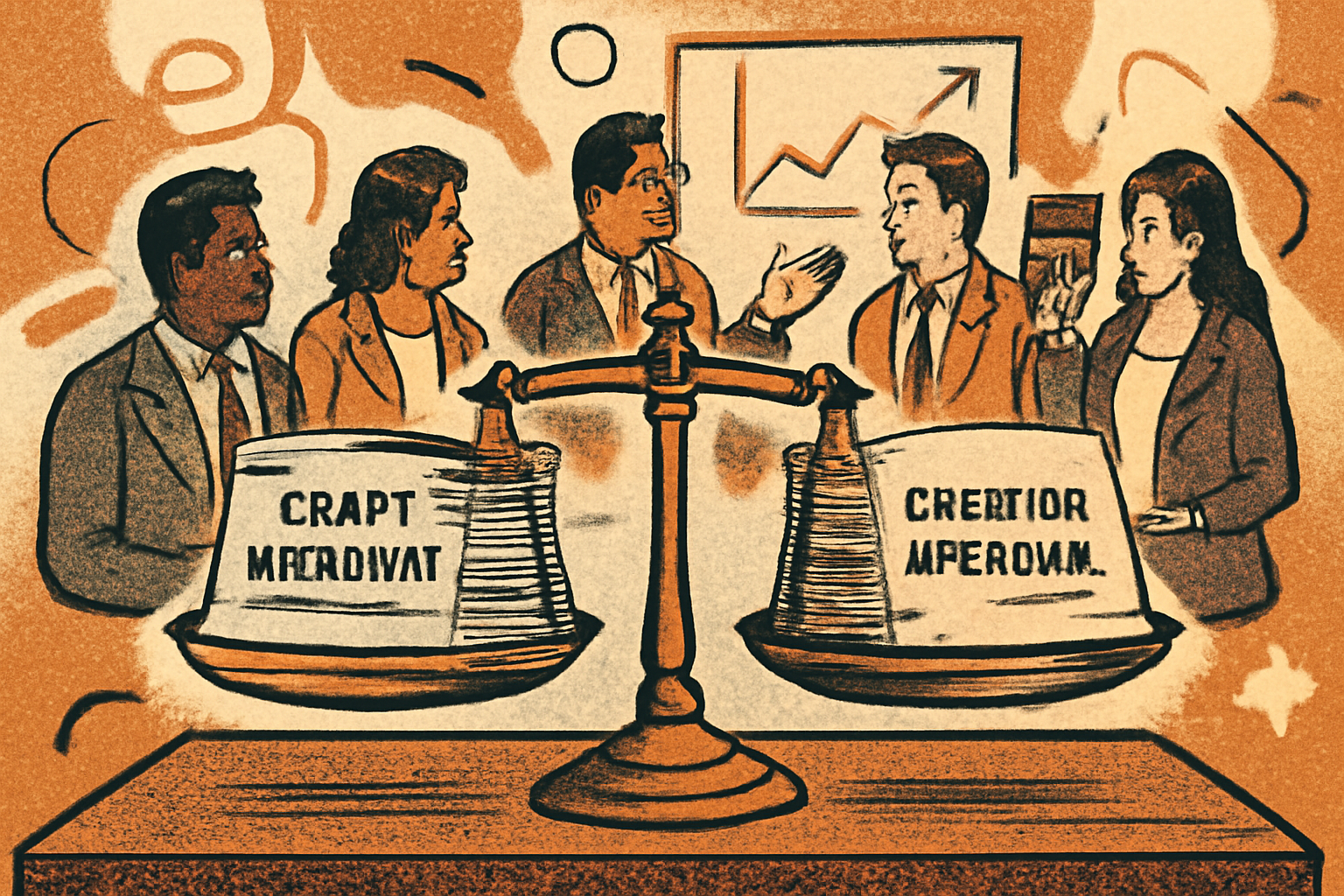
Minefields Separate Retention From Incentive Plans
Designing Key Employee Incentive Plans involves aligning performance-based metrics with compliance to Section 503(c) to withstand court scrutiny in bankruptcy scenarios.

Decoding Court Approval: KEIP Success Stories and Failures
Crafting and securing court approval for KEIPs involves strategic design, robust defense, and demonstrating performance-based incentives during bankruptcy proceedings.

Crafting Court-Approved KEIP Performance Metrics
Crafting Key Employee Incentive Plans involves balancing incentive structures with court approval requirements during bankruptcy.

This content is for entertainment and technical demonstration only and may be flawed, incomplete or outdated. Always consult a qualified professional for information and decisions. Content is provided “as is” without warranties of any kind. Use at your own risk. We're not responsible for any loss or damage from use or reliance.